

Choosing the right science learning tools for your elementary school child can make a huge difference in how excited they are to learn. Hands-on science kits are one of the best choices because they give grade-schoolers the chance to learn by doing.
Doing the experiments themselves helps turn scientific concepts into something they can better understand. Educators see the same results in the classroom, with 64% saying active, hands-on learning helps keep students excited and engaged.
Getting children involved is often easier than you might think, especially when AR and VR bring each experiment to life.
What Makes a Science Kit Hands-On?
Not every science kit offers the same learning experience. The best ones put the materials in children's hands and let them experiment and discover the science for themselves.
A hands-on science kit should give children the chance to participate in activities like:
- Mixing chemical reactions that fizz, bubble, or change color.
- Excavating fossils and exploring what they uncover.
- Building working models such as volcanoes and planetariums.
- Observing the results and discovering why they happened.
Some science kits take the learning even further by adding augmented reality (AR) and virtual reality (VR) to the experience.
How AR and VR Science Kits Work
AR and VR science kits combine hands-on experiments with interactive digital experiences. Children complete activities using the included materials, then use the companion app on a compatible smartphone or tablet to unlock AR or VR content. AR adds animated guidance to the lesson, while VR transports children into immersive environments that reinforce the science behind each activity.
Which AR and VR Science Kits Are Right for Your Child?
Four Abacus Brands collections make great choices for children ages 8 to 13 that are interested in STEM learning. They are Bill Nye's Science Kits, Professor Maxwell's, STEAM Lab VR, and the VR Oceans, Animals, and Dinosaurs Gift Sets.
The collection below compares these kits by science topic, skills targeted, included materials, and recommended activities.

Skills: Scientific method, chemistry, physics, observation.
Includes: VR goggles, guidebook, materials, free app.
Activities: AR experiments, fly over volcanoes & dive crystal caves in VR.
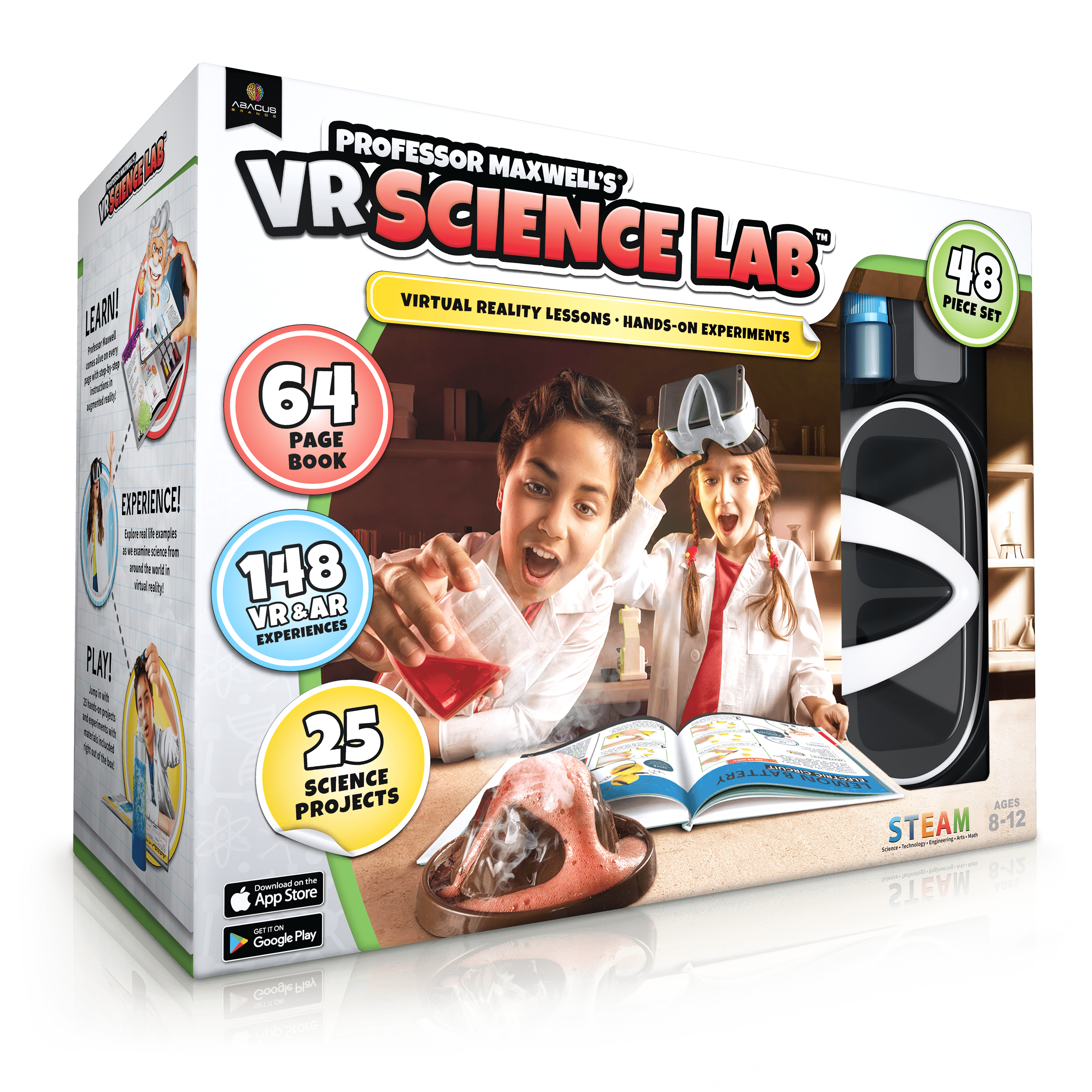
Skills: Foundational science, experimentation, critical thinking.
Includes: VR goggles, activity book, supplies, free app.
Activities: AR lava lamps & rockets; fly over an active volcano in VR.

Skills: Space science, astronomy, spatial reasoning.
Includes: VR goggles, activity book, experiment materials, free app.
Activities: Build planetariums; explore stars & black holes in VR.
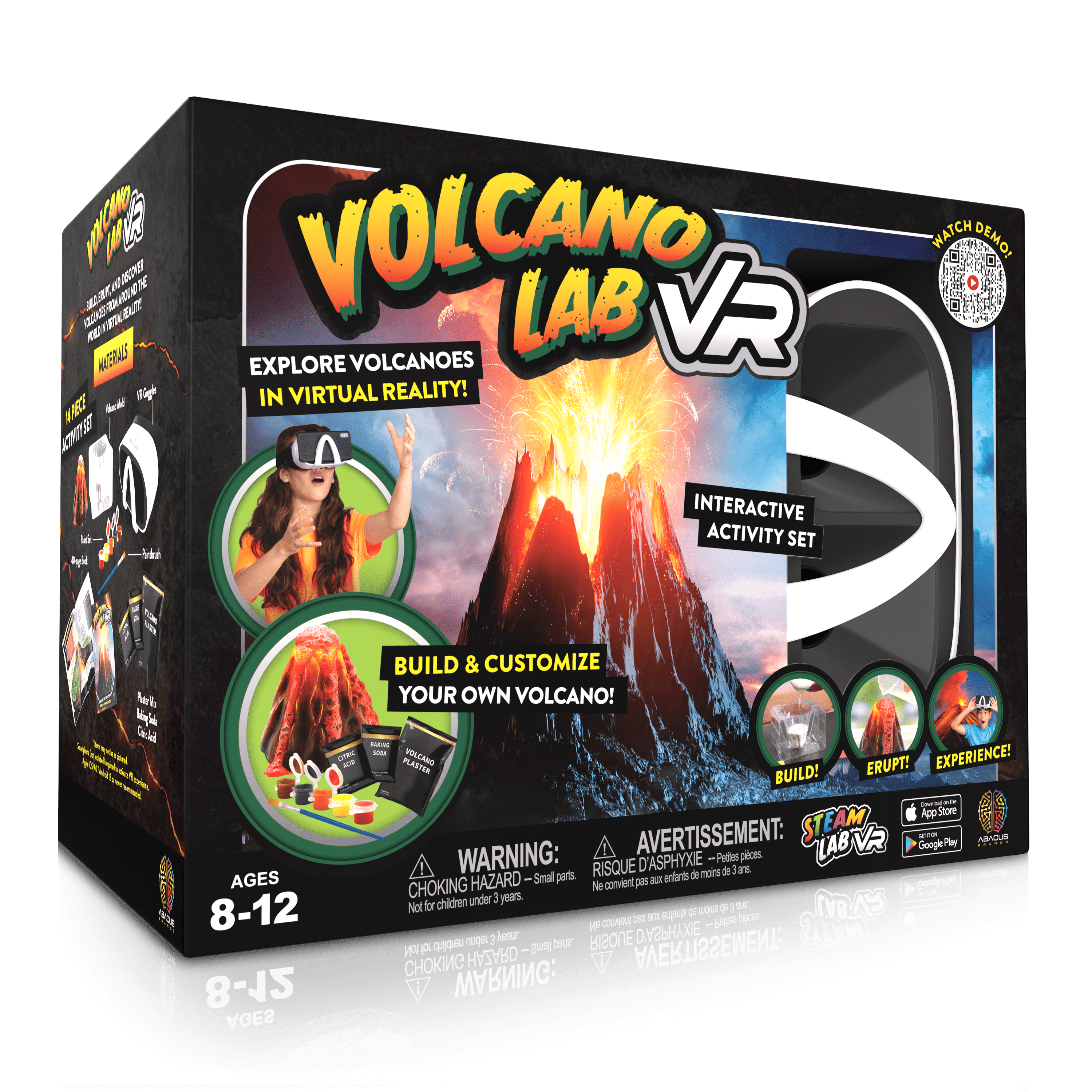
Skills: Earth science, engineering, model building.
Includes: VR goggles, build-it model kit, free app.
Activities: Mix plaster & erupt volcanoes; tour volcanoes worldwide in VR.
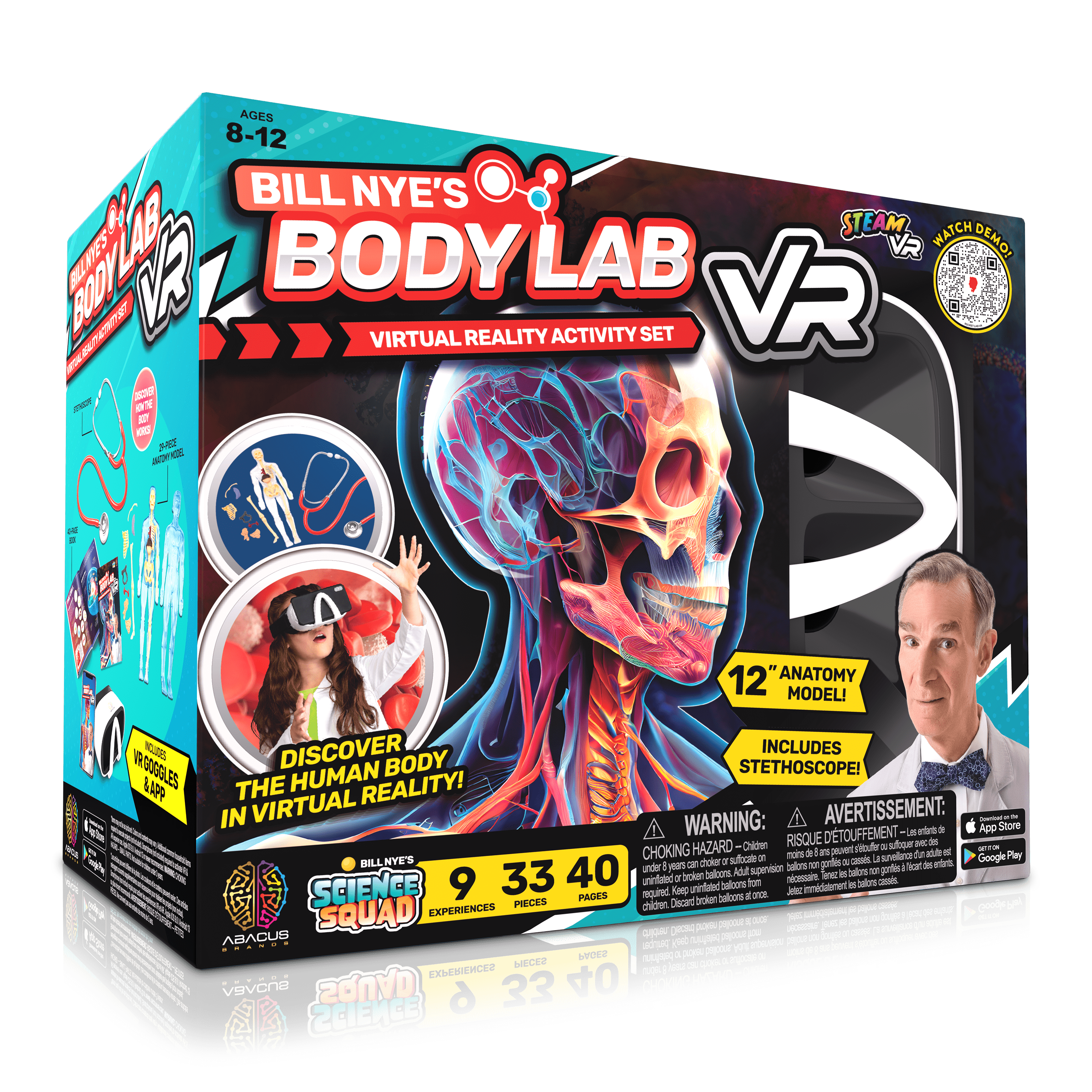
Skills: Human anatomy, body systems, life science.
Includes: 29-pc anatomy model, stethoscope, book, VR goggles, app.
Activities: Assemble anatomy models & tour organs in VR.
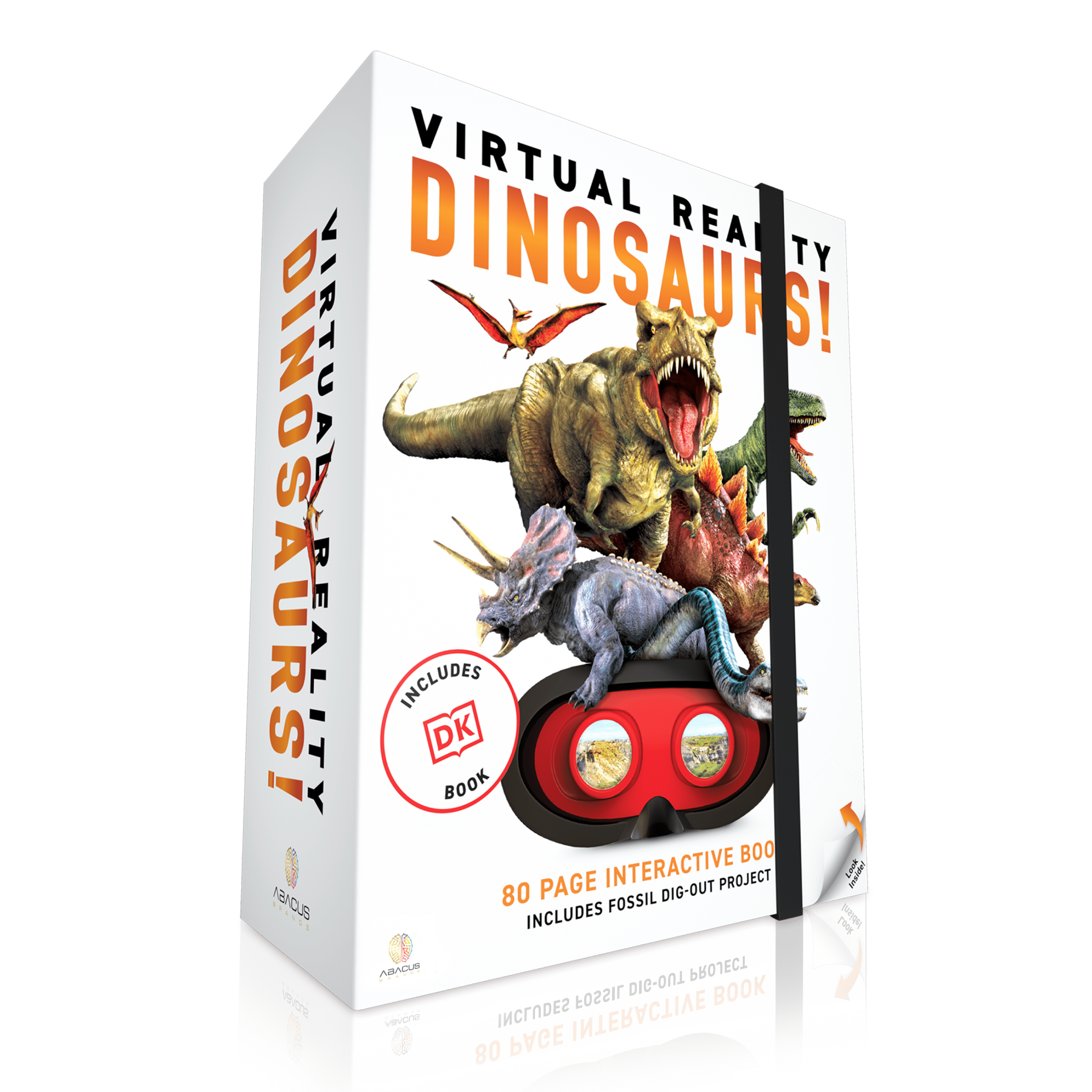
Skills: Marine biology, zoology, paleontology.
Includes: Interactive DK book, VR goggles, fossil dig or scratch-art.
Activities: Dig fossils or complete scratch-art (Toy Insider winner).
*Prices are valid at time of publication and may change. Look to the Abacus product page for current pricing.
Matching the Right Science Kit to Your Child
Start with the topic your child already enjoys most. Bill Nye's VR Science Kit is a good choice for curious children who want to explore chemistry, physics, space, and more through 30 experiments. If your child prefers one subject, Professor Maxwell's offers focused kits, including Science Lab and Universe.
Discovery Gift Sets
Take advantage of our award winning Discovery Box range of premium gift sets, most of which feature DK books and cover content like Dinosaurs, Human Body, Animals, Oceans and more!
Shop CollectionSTEAM Lab VR makes a great first hands-on science kit. Titles like Volcano Lab and Dino Dig focus on one project, making them easy for younger children to complete.
The Discovery Gift Sets add an 80-page DK book to the hands-on activities and VR experiences. For example, the Dinosaurs set lets children chisel a 14-inch T. rex fossil from solid rock.
How to Make a Hands-On Science Kit More Engaging
These tips can help your kid learn more from each experiment and stay excited about using the kit again:
- Choose a kit based on your child's interests. Whether they enjoy dinosaurs, oceans, or are interested in colonizing mars, picking a topic they already love can keep them engaged longer.
- Match the kit to your child's age and abilities. The best science kits align with their developmental stage and fine-motor skills to provide the right level of challenge.
- Save the VR experience until after the experiment. The hands-on activity builds understanding first, while VR helps reinforce what they just learned.
- Use VR in short bursts. The brief VR experiences reinforce the hands-on lesson without keeping children in the headset for long
- Check the supply list before you begin. Gathering everything ahead of time keeps the experiment moving without interruptions.
Frequently Asked Questions About Hands-On AR and VR Kits
What age are the AR and VR science kits Abacus offers best for?
The AR and VR kits in this guide are designed for kids that are 8- to 13-years-old.
What if my child is younger than 8?
Abacus also offers augmented reality products for younger children. The Sea Creatures AR Book brings ocean animals to life in AR, while the PAW Patrol AR Puzzle Cubez rewards children with an animated AR scene after they complete the puzzle. Both are designed for ages 3 to 6.
Do Abacus's AR and VR science kits need a separate VR headset?
No. VR goggles come in every box. All you supply is a phone with a rear camera to run the free app and power the AR and VR scenes.
Are AR and VR science kits real learning or just toys?
They're built on real experiments with step-by-step instruction, and the AR and VR reinforce whatever your child just did by hand. The screen time is the reward for doing the work, not a stand-in for it.
The right kit is the one that clicks with your child. Start with the topic they already enjoy, then let them complete the experiment before exploring it through AR and VR. Browse our hands-on science kits to find the next adventure for your young scientist.


